WeLCOME TO RAVINA INDUSTRIES MANUFACTURER & eXPORTER of linkage parts

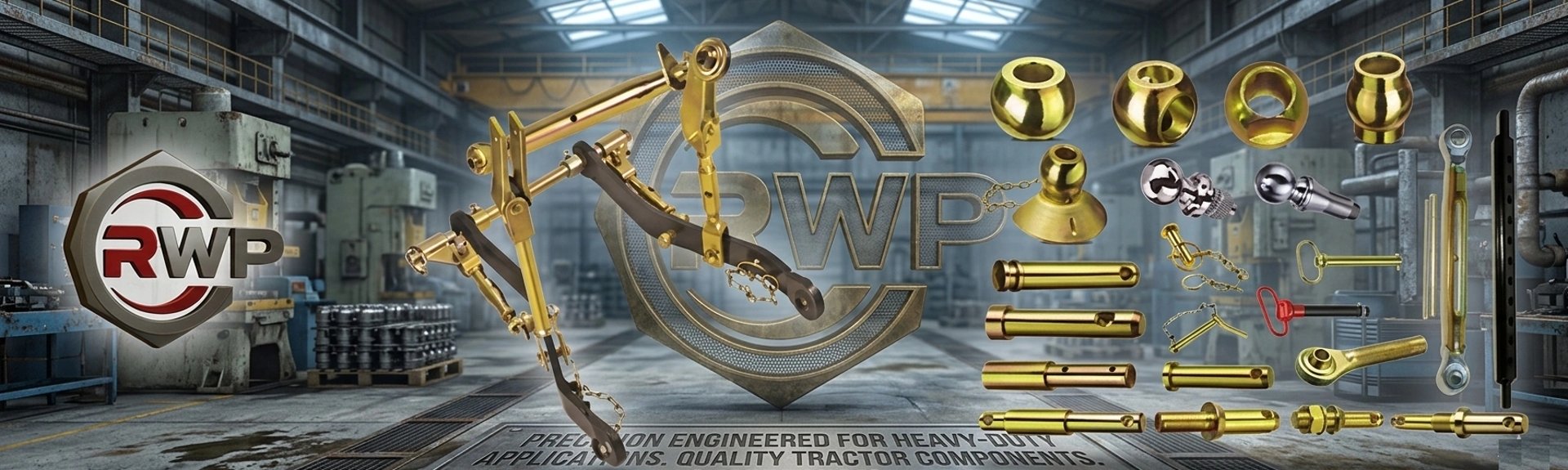
3 Point Hitch Linkage Parts Explained
3 Point Hitch Linkage Parts
SHIMON SAJ
4/14/20262 min read
Complete Guide to Tractor 3 Point Hitch Linkage Parts
The 3 Point Hitch Linkage System is one of the most important mechanisms used in modern tractors. It allows farmers to easily attach and operate agricultural implements such as ploughs, cultivators, rotavators, seed drills, and other farming equipment.
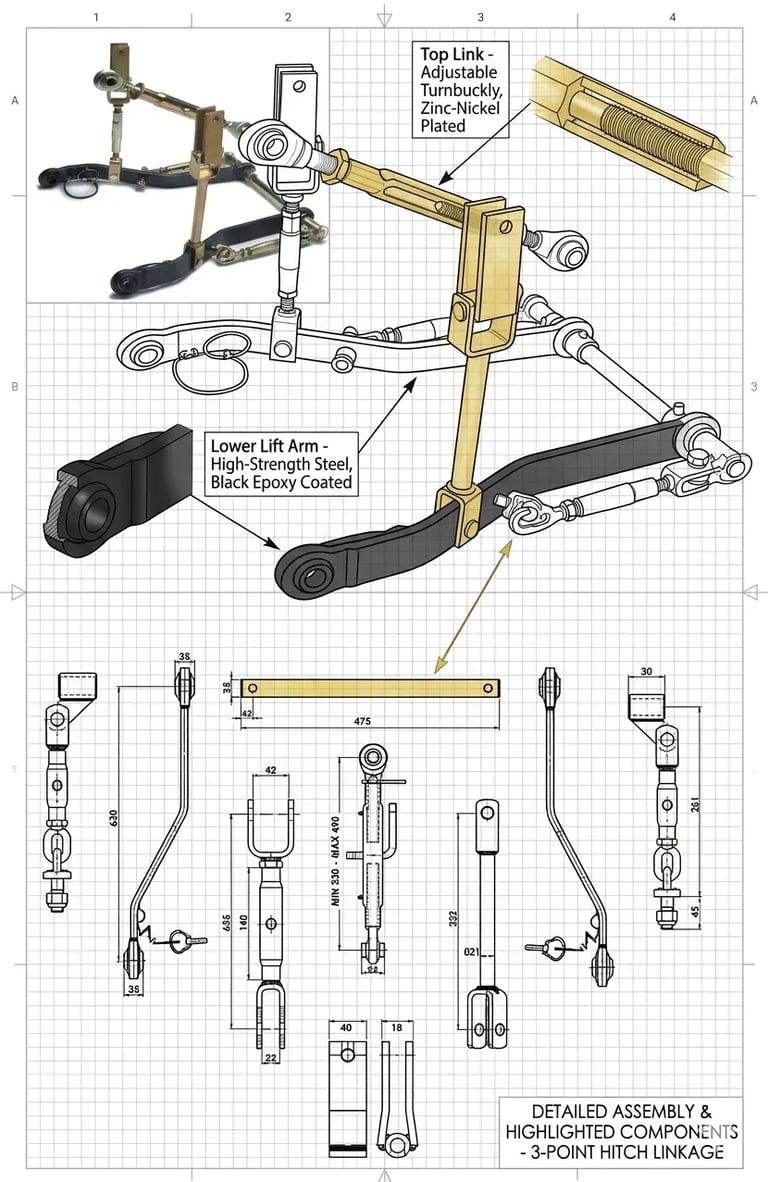
This system provides stability, control, and efficient power transfer from the tractor to the implement. The main components of a tractor 3 point hitch include the Lower Lift Arms, Top Link, Adjustable Top Link Assembly, Lynch Pins, Clevis Pins, and Hitch Pins. Each part plays a critical role in ensuring safe and efficient operation.
Lower Lift Arms
Lower Lift Arms, also known as Lower Link Arms, are the two strong horizontal arms located at the rear of the tractor. These arms are connected to the hydraulic system of the tractor and are responsible for lifting and lowering agricultural implements.
Functions of Lower Lift Arms
Support the weight of the attached implement
Lift and lower equipment using tractor hydraulics
Provide stability and balance during field operations
Lower link arms are usually manufactured using high-strength forged steel to withstand heavy loads and continuous field use.
Top Link
The Top Link is the upper connecting rod of the tractor 3 point hitch system. It connects the tractor to the upper point of the implement, forming a triangular structure with the lower lift arms.
Importance of the Top Link
Controls the angle of the attached implement
Helps maintain proper ground penetration of equipment
Improves stability and performance during operation
The top link is essential for maintaining the correct working position of implements such as ploughs and cultivators.
Adjustable Top Link Assembly
An Adjustable Top Link Assembly allows operators to change the length of the top link to adjust the working angle of the attached implement. This adjustment helps achieve better efficiency and precision in farming operations.
Features of Adjustable Top Link Assembly
Threaded body for easy length adjustment
Heavy-duty construction for durability
Compatible with different tractor models
Adjustable top links are commonly used in agricultural tractors worldwide due to their flexibility and ease of use.
Lynch Pins
Lynch Pins are small but essential fasteners used to secure linkage pins in place. They prevent the main hitch pins from sliding out during operation.
Key Features of Lynch Pins
Spring locking mechanism
Quick installation and removal
Corrosion-resistant coatings for durability
Despite their simple design, lynch pins play a vital role in maintaining the safety of tractor linkage connections.
Clevis Pins
Clevis Pins are cylindrical fasteners used to connect linkage components and pivoting joints in the tractor hitch system. They typically have a head on one side and a hole on the other side to secure them with a cotter pin or lynch pin.
Applications of Clevis Pins
Connecting linkage arms
Pivot points in mechanical joints
Securing adjustable components
Clevis pins are widely used in agricultural machinery and industrial equipment due to their strong and reliable fastening ability.
Hitch Pins
Hitch Pins are used to attach implements to the tractor’s drawbar or linkage system. They are designed to handle heavy loads and provide a secure connection between the tractor and the implement.
Characteristics of Hitch Pins
High tensile strength
Hardened steel construction
Designed for heavy-duty agricultural applications
Hitch pins are commonly used with equipment such as trailers, ploughs, cultivators, and other tractor attachments.
Importance of High-Quality Tractor Linkage Parts
Using high-quality tractor linkage components ensures:
Safe operation of agricultural equipment
Improved durability and load capacity
Reduced wear and maintenance
Better performance in tough farming conditions
Manufacturers often use forged steel, alloy steel, or heat-treated materials to produce reliable and long-lasting tractor linkage parts.