WeLCOME TO RAVINA INDUSTRIES MANUFACTURER & eXPORTER of linkage parts

3 Point Linkage Parts Explained: The Backbone of Modern Tractor Implements
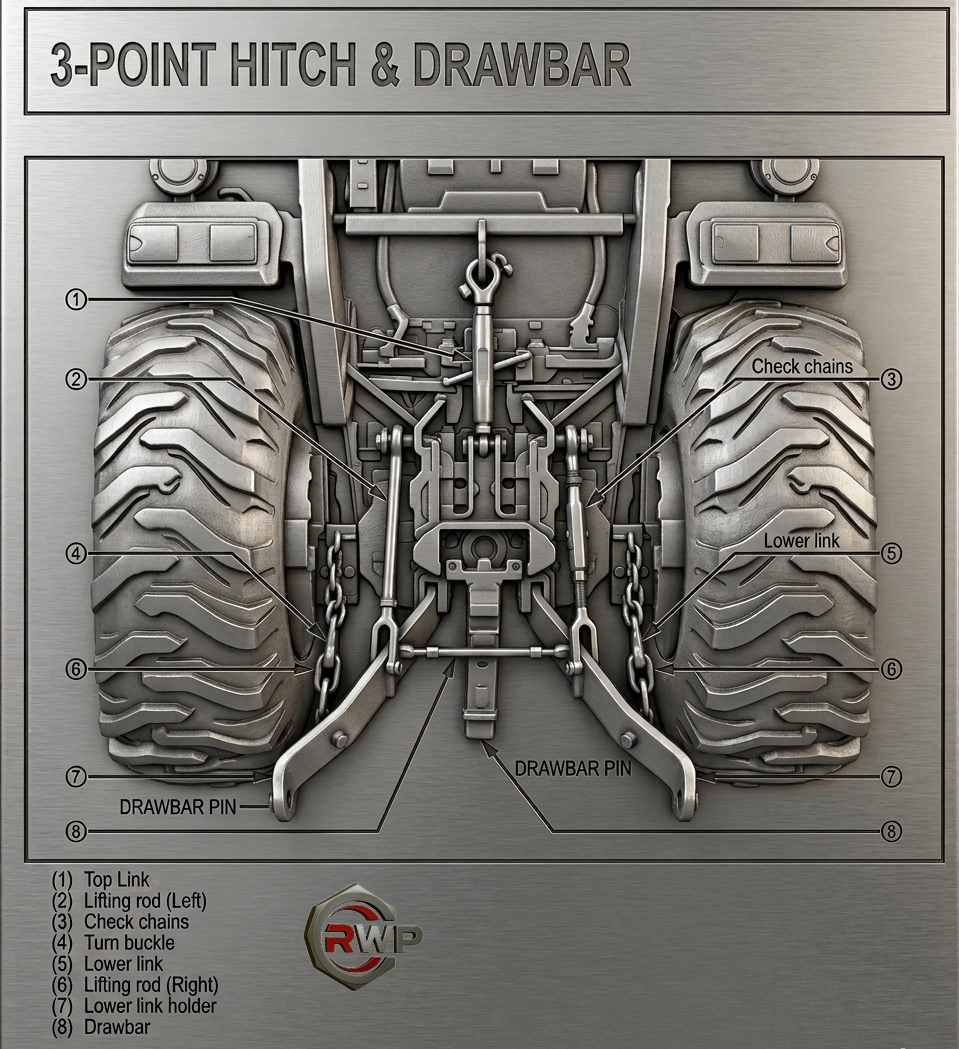
The Three-Point Linkage System is one of the most important mechanisms used in modern agricultural tractors. It is designed to connect tractors with a wide range of farming implements such as ploughs, cultivators, seed drills, and other equipment, allowing efficient power transfer and precise control during field operations. Understanding the complete structure and working of the 3 Point Linkage Parts System is essential for farmers, agricultural engineers, and machinery manufacturers.
SHIMON SUBHRAI
4/5/20262 min read
3 Point Linkage Parts: Essential Components for Modern Tractor Implements
The 3 Point Linkage System is one of the most important mechanical innovations in modern agriculture. Designed to connect tractors with agricultural implements, this system provides stability, control, and efficient power transfer during field operations. Farmers across the world rely on high-quality 3 point linkage parts to ensure durability, safety, and smooth functioning of equipment such as ploughs, cultivators, rotavators, seed drills, and other farm implements.
The three-point linkage system was introduced to create a standardized method for attaching implements to tractors. It consists of three connection points forming a triangular configuration — two lower arms and one upper link. This triangular geometry allows implements to move with the tractor while maintaining balance and depth control.
Because these parts handle heavy loads and constant movement, they must be manufactured using high-grade forged steel, precision machining, and strict quality control standards to ensure long service life and reliable performance in tough agricultural conditions.
Importance of High-Quality 3 Point Linkage Parts
Using reliable and precision-engineered linkage parts offers several benefits:
• Improved tractor stability during field operations
• Efficient power transfer from tractor to implement
• Reduced wear and maintenance costs
• Safe attachment of heavy implements
• Long operational life in harsh agricultural environments
Manufacturers producing export-quality agricultural components follow international standards such as DIN, BS, and ISO to ensure compatibility with global tractor brands.
List of Common 3 Point Linkage Parts
A complete tractor linkage system consists of several mechanical components working together. Below is a list of commonly used 3 point linkage parts:
Top Link Assembly
Connects the upper point of the tractor to the implement and controls the angle of attachment.Lower Link Arms
The two main arms attached to the tractor that support and lift the implement.Lift Arms
Connect hydraulic lift mechanisms to the lower links for raising and lowering implements.Stabilizer Bars
Prevent excessive sideways movement of implements during operation.Check Chains
Help maintain implement alignment and reduce sway.Linkage Pins
Heavy-duty pins used for securing different linkage components together.Ball Ends / Ball Joints
Provide flexible movement and rotation between linkage arms and implements.Clevis Brackets
Used for secure attachment points within the linkage assembly.Turnbuckles
Adjustable components used to regulate linkage length and alignment.Top Link Pins
Special pins used to secure the top link to the tractor or implement.Lynch Pins
Safety locking pins that prevent other pins from slipping out during operation.Hitch Pins
Used for connecting implements securely to the linkage system.
Applications of 3 Point Linkage Parts
These components are widely used in agricultural machinery such as:
• Ploughs
• Cultivators
• Harrows
• Rotavators
• Seed drills
• Post hole diggers
• Fertilizer spreaders
High-precision 3 point linkage components are essential for efficient tractor performance and improved agricultural productivity.
Conclusion
The 3 point linkage system remains a cornerstone of modern farming equipment. Durable and precision-manufactured 3 point linkage parts ensure tractors operate efficiently with a wide variety of agricultural implements. Investing in high-quality linkage components improves reliability, reduces downtime, and enhances overall farm productivity.
For farmers, equipment manufacturers, and agricultural machinery suppliers, choosing strong, corrosion-resistant, and internationally compliant linkage parts is key to achieving long-term performance and operational efficiency.